
Permanence as Luxury — A Sensory Awakening from London Design Week 2026
As we move through March 2026, the Design Centre, Chelsea Harbour has become the stage for a profound discourse on "Permanence as Luxury". This year’s London Design Week does more than merely define the seasonal lexicon; it heralds a decisive shift away from transient novelties toward a design ethos of "Quiet Confidence" and poetic longevity.
1. The 70s Warmth: A Departure from Cool Greys
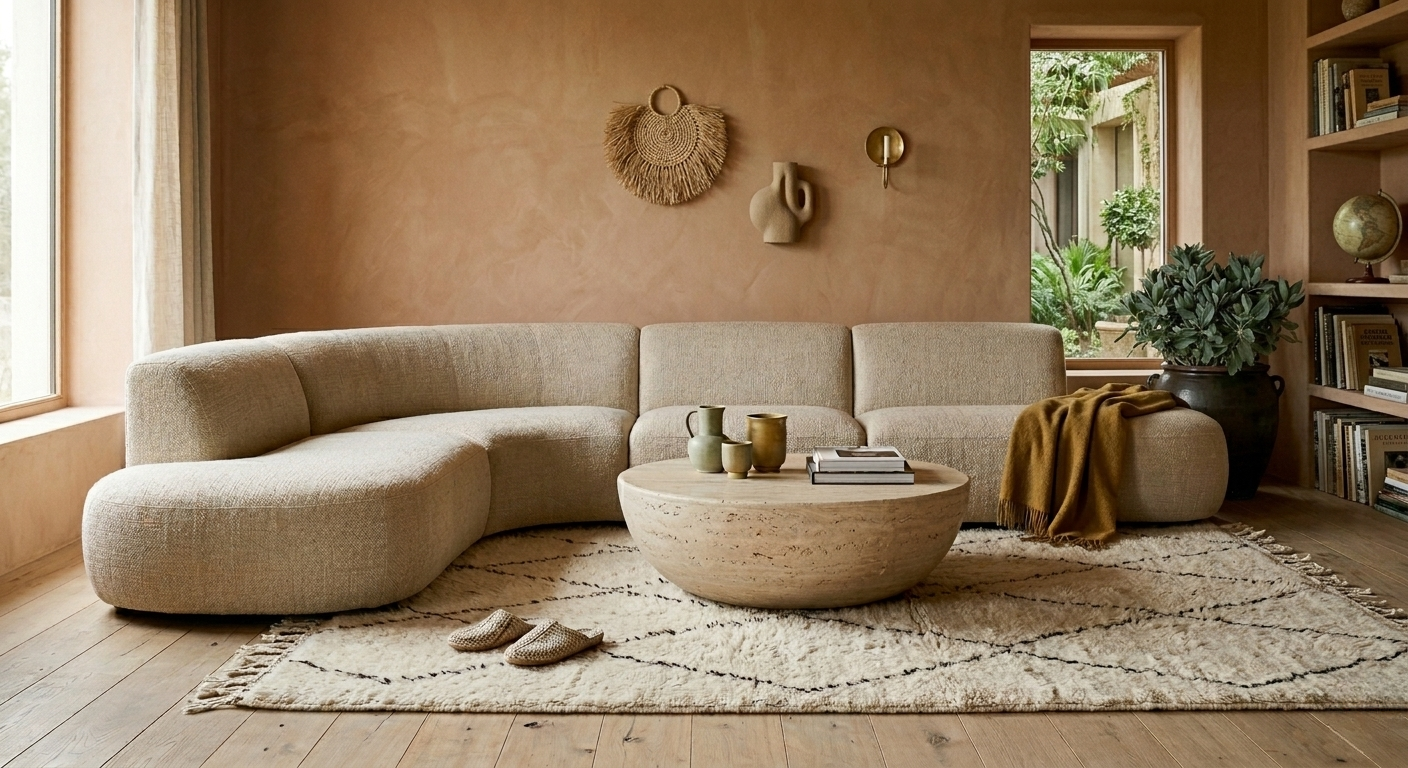
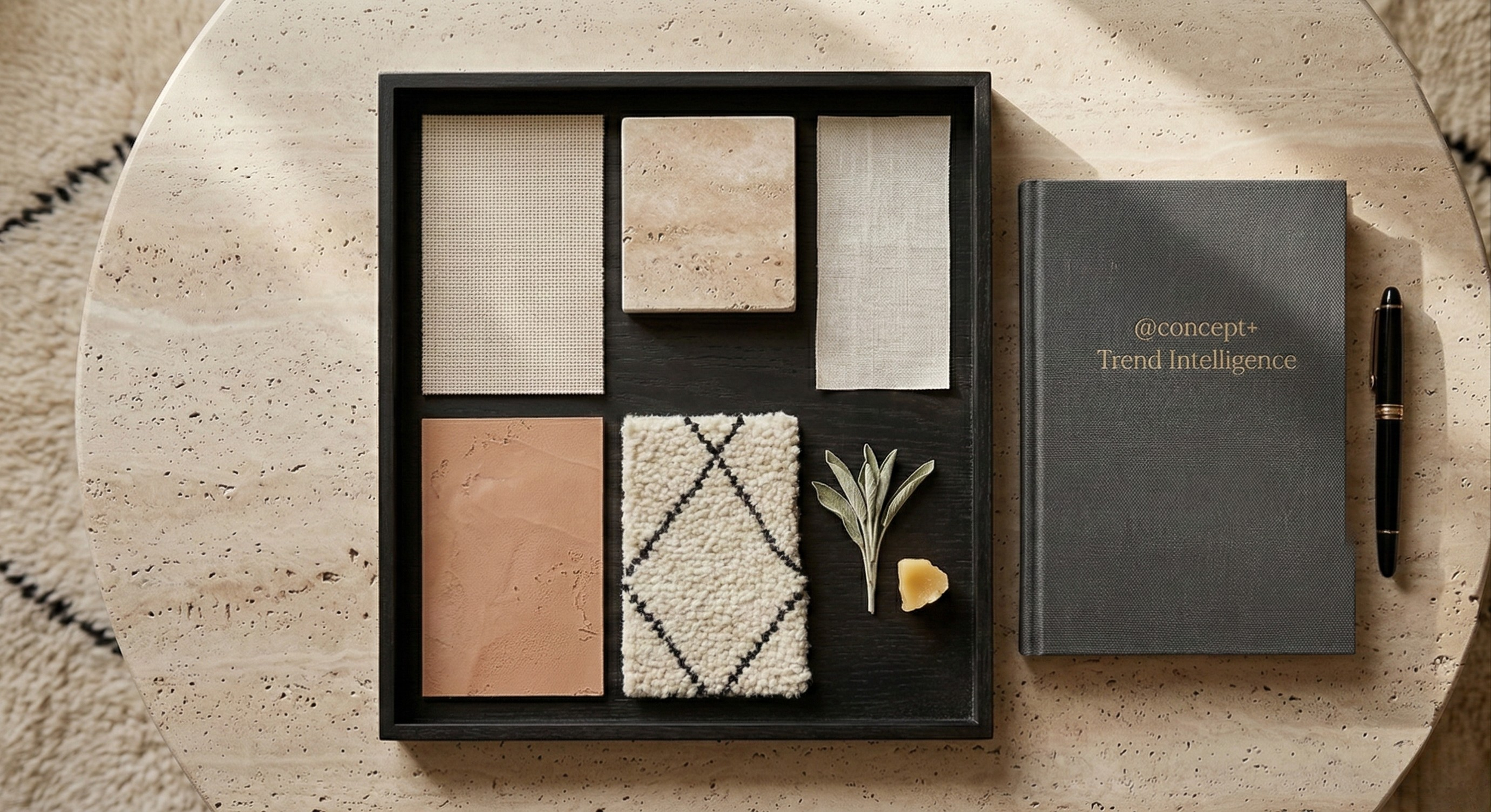
The most immediate evolution witnessed at Chelsea Harbour is a complete recalibration of temperature. We are formally bidding farewell to the clinical cool-grey eras, embracing instead a palette of sun-drenched, 70s-inspired earth tones that find their physical expression in the soft clay and terracotta plaster walls of our current archive.
Caramelised Neutrals: Interior volumes are now being saturated with olive-grey hybrids and rich, "caramelised" base notes.
Sensory Restoration: This colour strategy is a deliberate attempt to create an atmosphere of "emotional enclosure" — a restorative calm that mirrors the way morning light diffuses across a textured, warm-hued wall.
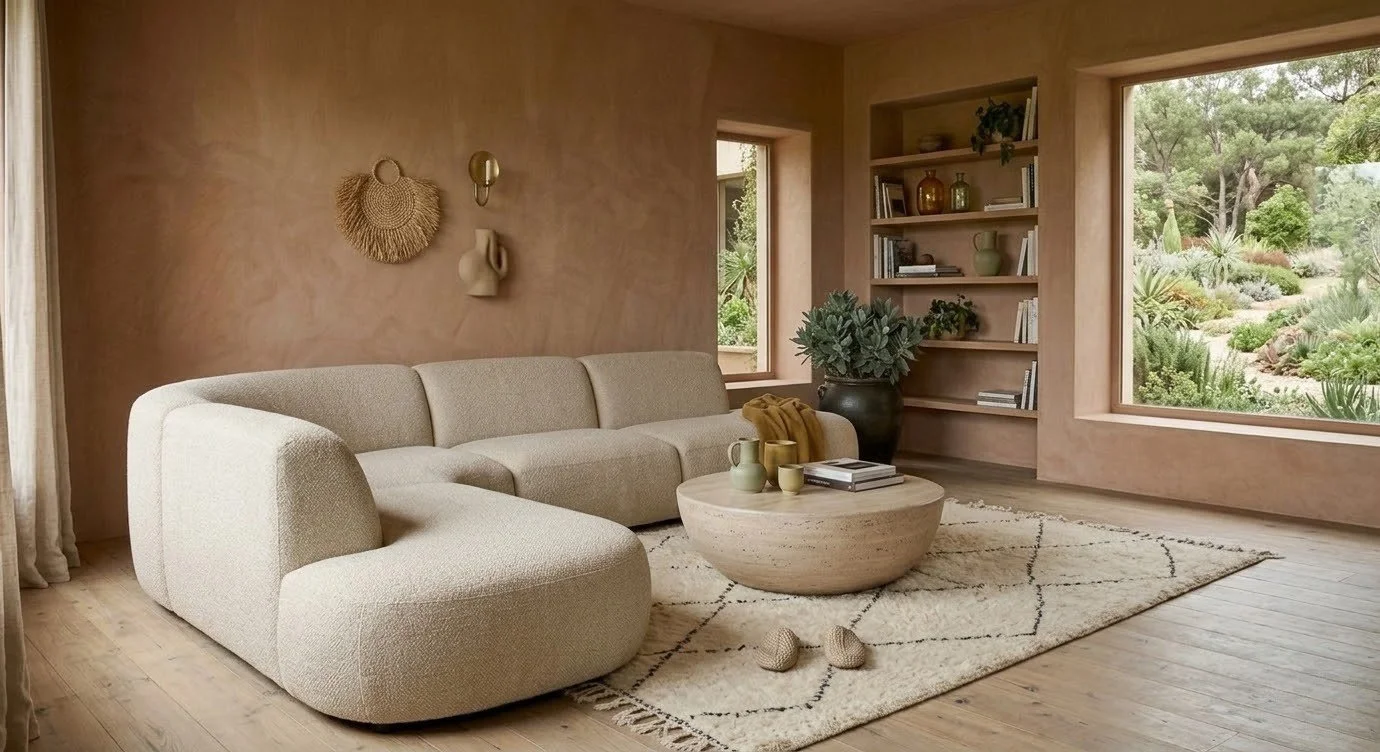
Luxury resides in the stillness.
It is the raw honesty of oatmeal linen resting against sun-drenched terracotta—a sanctuary crafted for the sole purpose of healing.
2. "Essential Materiality" & The Artisanal Hand
Transcending traditional price tags, luxury in 2026 finds expression through 'Essential Materiality'—an unadorned celebration of substance. The focus has shifted to tactile surfaces that celebrate "Slow Living" through meticulous craftsmanship.
Artisanal Details: Visible weaves and hand-hewn textures have become the soul of the modern home. This is evidenced by the heavy oatmeal worsted linen of the upholstery and the hand-woven grass wall hangings that break the silence of the room.
Tactile Stratification: Honed travertine, shaggy wool rugs with geometric depth, and patinated metals are layered to create a deeply immersive sensory experience.
Case Study (Arte): The brand Arte has set a new benchmark with its "Corium" collection, featuring top-grain leathers enhanced by hand-stitching and intricate embroidery — a level of detail we mirror in our curated material board.
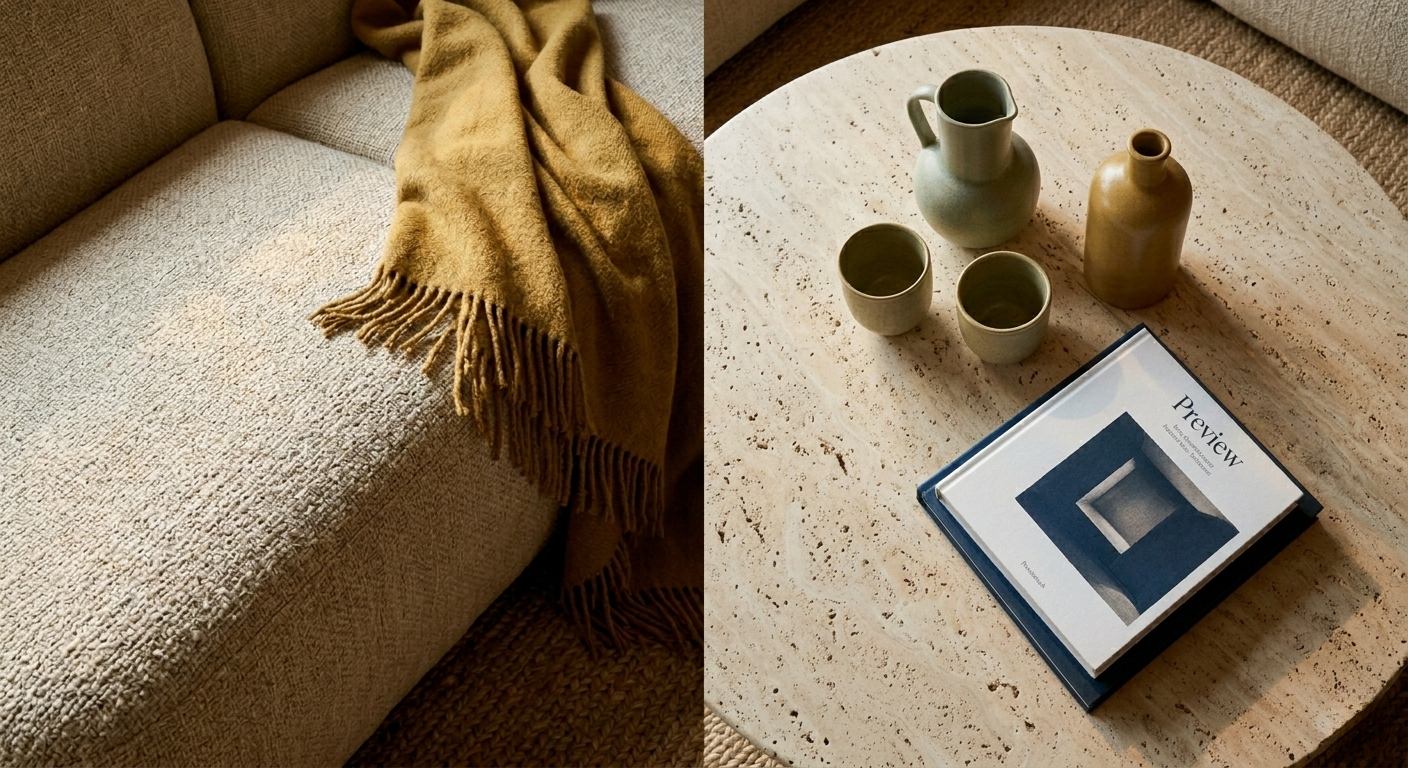
A Study of Light
Lingering upon the heavy weave before settling into the stone’s cool depth, the morning light captures a silent archive where artisanal heritage meets modern stillness.
3. Biomorphic Shapes: The Organic Evolution of Space
Building on our observations of "Fluidity," London Design Week has confirmed the absolute dominance of Biomorphic Shapes.
Curvilinear Comfort: Rounded, modular sofas and deep-seated "wellness" silhouettes prioritise sensory comfort over rigid formality. In our visual narrative, the sofa flows like a living sculpture, its curves guiding the eye toward the garden view and the wooden heritage shelving beyond.
Glass Craftsmanship (Gallotti & Radice): Celebrating their 70th Anniversary, Gallotti & Radice showcased an extraordinary mastery of glass, transforming this transparent medium into fluid, sculptural furniture with a sense of "quiet permanence".
4. Intelligent Integration & Modern Heritage
Smart technology in 2026 has become entirely "invisible," disappearing into the fabric of the home to preserve visual continuity.
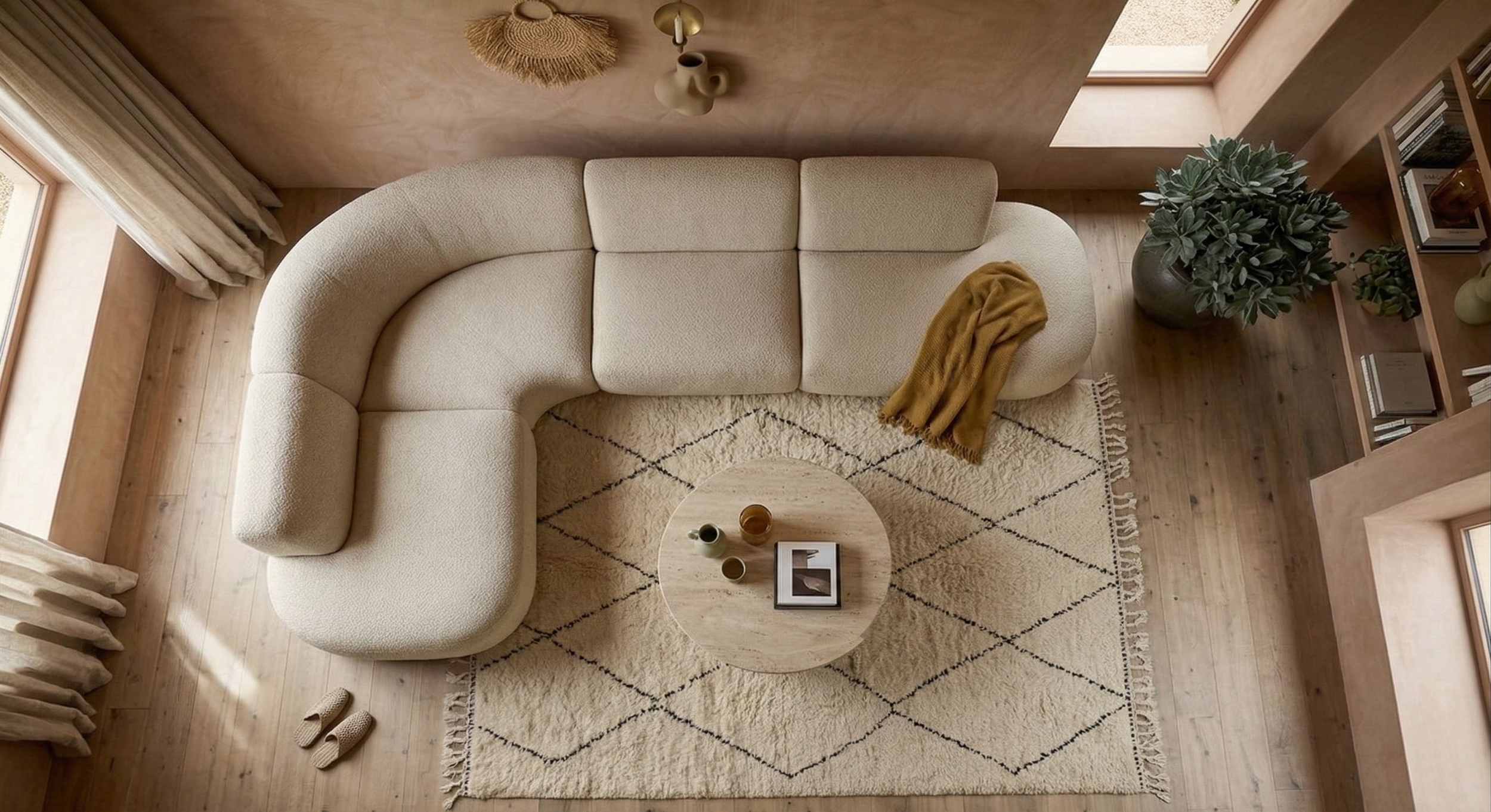
Technology that Vanishes: Wireless charging surfaces and discreet AV systems allow the focus to remain on the architectural beauty of the space. Even the lighting — such as the brass sculptural sconce — integrates intelligence without disrupting the artisanal atmosphere.
Modern Heritage: Heritage brands are reclaiming their authority by reinterpreting archival classics for contemporary living. We see this in the seamless blend of bespoke joinery and historic textures, creating a space that feels both avant-garde and timelessly grounded.
Note: This series of visuals was entirely conceived and simulated through AI technology.
